
The transition toward low-emission biomass processing has significantly influenced the operational philosophy of modern charcoal production systems. Conventional charcoal manufacturing methods often rely on rudimentary combustion techniques that generate excessive smoke, volatile organic compounds, and thermal inefficiencies. In contrast, advanced carbonization technology integrates controlled thermochemical conversion, emission mitigation, and energy reutilization to establish more sustainable production frameworks. Consequently, the modern charcoal maker machine has become a critical component in environmentally responsible biomass valorization.
Efficient Utilization of Biomass Feedstock
Feedstock optimization represents one of the most important sustainable practices in charcoal production operations. Agricultural residues, forestry by-products, coconut shells, rice husks, bamboo waste, and sawdust are increasingly utilized as renewable carbonaceous resources. Instead of allowing these materials to decompose or undergo open burning, operators convert them into stable biochar through oxygen-limited pyrolysis processes.
Material preprocessing is equally significant. Moisture reduction through natural drying or waste heat recovery minimizes unnecessary thermal expenditure during carbonization. Uniform particle sizing improves heat transfer kinetics inside the reactor chamber, thereby enhancing carbon yield consistency. Such procedural refinements reduce feedstock wastage and improve operational stability.
Modern biomass pyrolysis plant for sale also incorporate automated feeding mechanisms. These mechanisms regulate biomass input rates with greater precision, limiting temperature fluctuation and incomplete carbonization. The result is a higher fixed-carbon product with reduced tar generation.

Adoption of Closed-Loop Pyrolysis Technology
Sustainability in charcoal manufacturing increasingly depends on closed-loop thermal systems. Traditional kilns dissipate combustible gases directly into the atmosphere. Advanced equipment, however, captures pyrolysis by-products and redirects them into secondary combustion chambers. This process substantially reduces atmospheric contamination while simultaneously improving thermal efficiency.
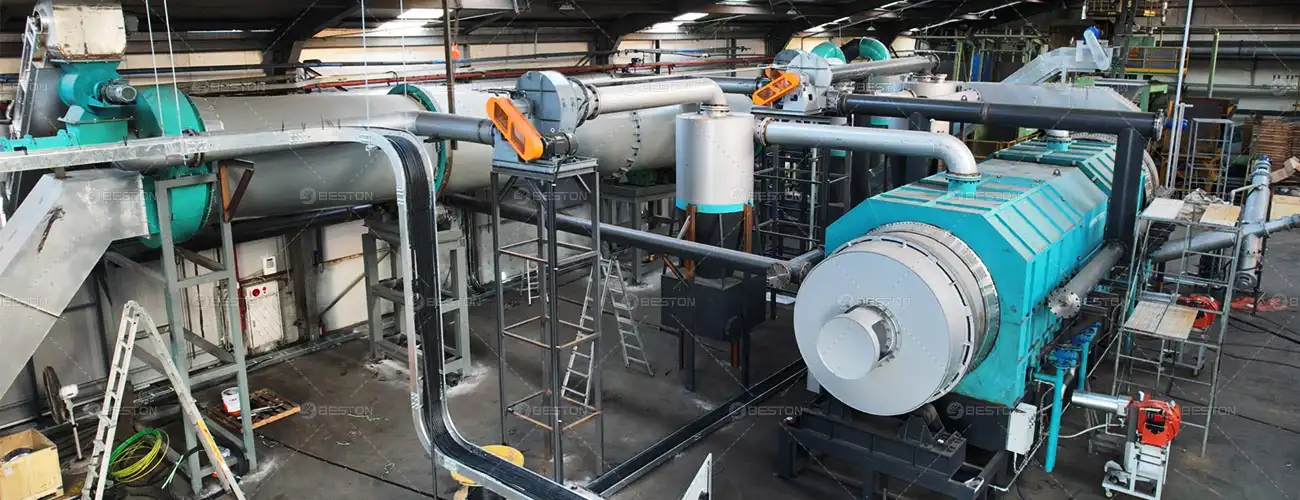
A contemporary pyrolysis machine for biochar commonly integrates indirect heating architecture. Instead of exposing biomass directly to flames, heat transfer occurs through insulated reactor walls or heat exchangers. Such a configuration minimizes ash contamination and stabilizes carbonization parameters.
Secondary syngas reutilization further strengthens environmental performance. Non-condensable gases generated during pyrolysis can partially sustain reactor heating requirements after initial startup. This self-heating capability decreases dependence on external fossil fuels. In industrial-scale applications, recovered thermal energy may also support feedstock drying systems or ancillary manufacturing processes.
Emission Reduction and Environmental Compliance
Air quality management has become indispensable in charcoal processing facilities. Sustainable operations require comprehensive flue gas purification systems capable of mitigating particulate emissions and volatile pollutants. Cyclone dust collectors, spray towers, activated carbon adsorption units, and electrostatic precipitators are increasingly integrated into modern production lines.
The deployment of intelligent monitoring systems also contributes to environmental stewardship. Sensors continuously track reactor temperature, pressure differentials, and exhaust composition. Real-time process adjustment reduces the probability of incomplete pyrolysis and excessive smoke generation.
Water conservation strategies are likewise gaining importance. Closed-circuit cooling systems reduce freshwater consumption while preventing wastewater discharge. Some facilities additionally incorporate rainwater harvesting infrastructure to supplement industrial utility requirements.
These developments have elevated the attractiveness of advanced equipment categories such as biochar machine for sale offerings designed specifically for low-emission industrial applications. Buyers increasingly prioritize compliance with regional environmental regulations and carbon reduction objectives.
Energy Conservation Through Process Optimization
Thermal management remains central to sustainable charcoal production. Heat loss through poorly insulated reactor surfaces can substantially reduce process efficiency. Modern carbonization systems therefore utilize refractory linings, multilayer insulation materials, and heat-retention chambers to maintain stable operating temperatures.
Automation also enhances energy efficiency. Programmable logic control systems optimize heating cycles, residence time, and cooling phases with minimal operator intervention. This precision reduces unnecessary fuel consumption and improves production continuity.
In certain integrated facilities, excess pyrolysis gas is converted into electrical power through gas generators or combined heat and power systems. Such configurations transform waste energy streams into productive industrial assets. The integration of renewable biomass energy within the manufacturing cycle reflects an increasingly circular operational model.
Circular Economy Contributions
Sustainable charcoal operations extend beyond fuel production. Biochar generated through controlled pyrolysis possesses significant agronomic and environmental value. When incorporated into soil systems, biochar improves water retention, nutrient adsorption capacity, and microbial activity. Its long-term carbon stability also supports carbon sequestration initiatives.
This multifunctional application has accelerated interest in industrial solutions such as biomass pyrolysis plant for sale configurations capable of producing standardized biochar grades for agricultural, environmental remediation, and energy sectors.
Additionally, by-products including wood vinegar and combustible gases can be commercially utilized. Wood vinegar may serve as a natural agricultural additive, while surplus syngas can support thermal energy generation. Such comprehensive resource utilization minimizes operational waste while strengthening economic viability.
Conclusion
The evolution of sustainable charcoal production is increasingly characterized by technological sophistication, environmental accountability, and resource efficiency. Advanced reactor engineering, emission purification, heat recovery integration, and biomass reutilization collectively redefine modern carbonization practices. As industries pursue lower-carbon manufacturing pathways, the adoption of intelligent charcoal maker machine systems and high-efficiency pyrolysis technologies will continue to expand. Sustainable operation is no longer a supplementary objective. It has become a fundamental operational standard within the contemporary biomass processing sector.